For generations, we’ve been told that “the system” works. That the education system opens doors, the foster care system protects vulnerable children, and the criminal justice system brings justice to victims. But behind every success story lies countless stories of neglect, injustice, and systemic failure.
We like to believe we live in a just world. That when a child goes missing, every resource will be exhausted to bring them home. That authorities will act swiftly. But the truth is far more complex—and often, far more devastating.
As the second anniversary of True Crime Musings approaches, I’ve found myself reflecting on the role of the system in child disappearances. We place immense faith in our institutions, assuming they will act in the best interests of the people they serve. But the reality is, these systems often reflect the same biases and inequalities of the society that built them—racism, classism, xenophobia, homophobia, and ableism among them.
Too often, these biases lead to devastating consequences for the most vulnerable—especially children who are already living on the margins. Many of these victims are caught in intersecting crises: poverty, homelessness, addiction, untreated mental illness, racial injustice, and unstable foster placements.
These children need someone who won’t look away.
Someone like you.
Over the years, I’ve researched countless missing persons cases. Each one leaves a mark. But three cases in particular have changed the way I see the world and its systems. Today, I want to share the stories of Anthonette Cayedito, Relisha Rudd, and Jaliek Rainwalker—three children who vanished under mysterious circumstances, and whose disappearances expose deep-rooted flaws in the very systems meant to protect them.
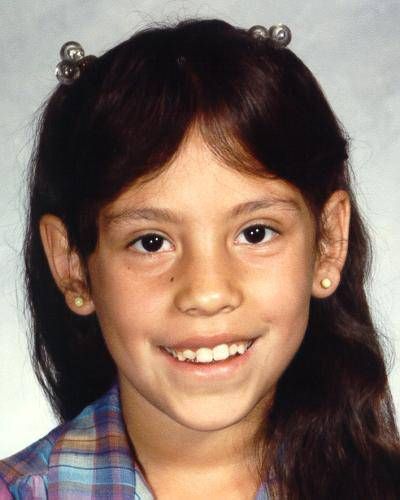
Anthonette Cayedito
- Missing since April 6th, 1986 from Gallup, New Mexico
- Sex: Female
- Race: Biracial (Native American/white)
- Hair Color: Black
- Eye Color: Brown
- Date of Birth: December 25th, 1976
- Age: 9 (at the time of her disappearance)
- Height: 4’7″
- Weight: 55 pounds
- Distinguishing characteristics: Dark-colored moles on her right cheek, nose, back, both hands, and her right knee. She has scars on one of her knees and her lip. Her ears are pierced. She also wears eyeglasses.
- Clothing description: Anthonette was last seen wearing a knee-length, pink nightgown. She was possibly wearing a silver chain with a small cross-shaped pendant, but this is unconfirmed.
Image and information courtesy of The Charley Project.
For more information about Anthonette’s disappearance, view my write-up here.
Case 1: The Disappearance of Anthonette Cayedito
I first learned about Anthonette Cayedito over a decade ago while reading a Wikipedia page about mysterious disappearances. All I knew at the time was that she vanished in the middle of the night from her home in Gallup, New Mexico, and that there was a haunting 911 call years later, possibly from Anthonette herself.
Since then, her case has opened my eyes to the intersection of poverty, racism, and the harrowing history of Native American race relations in the United States. Every account of her describes her as a sweet, smart, caring child with a heart of gold. She cared for her younger sisters, enjoyed church, and loved the color purple. Although not much is known about her early life and personality, it’s clear she had a good head on her shoulders, and with the right opportunities, she could’ve gotten far in life.
She had so much potential—until someone took it all away.
Her case led me down a rabbit hole, where I learned about Missing and Murdered Indigenous Women (MMIW). This phenomenon describes how Native American and First Nation women are more likely to go missing and be murdered, despite making up a small subset of the population of the United States and Canada. There are a lot of factors at play here, including generational trauma, poverty, cultural erasure, and racism. There are a variety of resources written by Indigenous people, but this website is a good place to start. Learning about this gave me a better understanding of the factors that often contribute to disappearances.
This case also haunts me because she was a little girl who seemingly vanished in the middle of the night. From the start, there were many inconsistencies in the timeline of events, and some details didn’t emerge until years later. Despite a few chilling leads, including the 911 call and a potential sighting years later, Anthonette remains missing. Some believe she may have been murdered. Others think she may have been trafficked and is still alive today.
Whatever the truth, she was a little girl who deserved safety, love, and the chance to grow up. And the system failed her.

Relisha Rudd
- Missing Since March 1, 2014 from Washington, D.C.
- Sex: Female
- Race: Black
- Hair Color: Black
- Eye Color: Brown
- Date of Birth: October 29, 2005
- Age: 8 (at the time of her disappearance)
- Height: 4’0″
- Weight: 80 pounds
- Distinguishing characteristics: Relisha’s nickname is “Li’l Mama.”
- Medical conditions: Relisha may be in need of medical attention for unknown reasons.
Clothing description: Relisha’s last known clothing description is unknown. However, she was possibly last seen wearing a purple Helly Hansen winter jacket and pink boots.
Image and Information courtesy of The Charley Project.
For more information on the disappearance of Relisha Rudd, click here to view my write-up.
Case 2: The Disappearance of Relisha Rudd
I first learned about Relisha’s disappearance when I was in college, around the time I was volunteering at a domestic violence shelter. Although I don’t remember exactly how I learned about her case, it’s haunted me for years.
She was a young girl caught in a web of generational instability: foster care, poverty, and homelessness. She had support from her school, the homeless shelter she was staying at, and Child Protective Services (CPS).
We like to believe that these systems will always keep children safe, that they’re the answer to society’s ills. But even with all of this support, it still took weeks for someone to notice she was gone and report her as missing.
And even after she disappeared, she still didn’t get the attention she deserved. Around the same time she disappeared, the disappearance of Malaysia Airlines Flight 370 made headlines around the world.
And Relisha’s story was forgotten.
Many have argued that the reason her case never received proper attention was because of Missing White Woman Syndrome. In other words, because Relisha was a poor, homeless Black girl, her case was going to receive little attention due to systemic racism and classism.
But she deserves to be remembered.
She was a sweet, sassy, bright girl with hopes and dreams of a better future. She lit up a room, and she has a special place in the hearts of all who knew her. She is more than her circumstances, more than a cautionary tale. She was a little girl who deserved the world. She, along with every child, deserves someone who’s willing to fight for them.
There are thousands of Relishas in the United States alone, in foster care, homeless shelters, and schools. I know, because I saw her face in that of every child I cared for at the domestic violence shelter.
There were so many warnings in Relisha’s case that something was wrong. And even with all of the systems involved, no one spoke up for her. She didn’t need bureaucracy. She needed one adult who was willing to go the extra mile.
And you can be that adult.
If her story has affected you like it has me, I strongly encourage you to look into volunteering at a local school, homeless shelter, or foster care agency. The best thing we can do for these vulnerable kids is to be a reliable adult. Be the person they can confide in. Be the person who helps them rediscover joy. Be the person who speaks up when something’s not right.
My greatest hope is that Relisha is found alive and can reclaim her life. But even if that doesn’t happen, we can still grant her justice by keeping other children from slipping through the cracks. Step into these children’s lives. Be their support. Sound the alarm if something’s not right. It takes all of us to create safety and protection for children. May we have the courage to do so.

Jaliek Rainwalker
- Clothing description: Jaliek was last seen wearing a bright yellow fleece pullover, a gray t-shirt with an image of a dragon, blue jeans, and black canvas high-top sneakers.
- Missing Since November 1, 2007 from Greenwich, New York
- Sex: Male
- Race: Biracial (Black, White)
- Hair Color: Brown
- Eye Color: Green
- Date of Birth: August 2, 1995
- Age: 12 (at the time of his disappearance)
- Height: 5’6″
- Weight: 105 pounds
- Distinguishing characteristics: Jaliek had a slight speech impediment which caused him to pronounce the letter “r” like a “w.” He had blond highlights in his hair, and it was styled in a two-inch afro. His nickname was “Jay,” and he had several moles on his back.
- Medical conditions: Jaliek experienced prenatal exposure to alcohol and cocaine, which leads to severe emotional problems and violent outbursts. He was diagnosed with Reactive Attachment Disorder.
Images and Information Courtesy of The Charley Project.
For more information about the disappearance of Jaliek Rainwalker, view my write-up here.
Why Jaliek Rainwalker’s Disappearance has Stayed with Me
Jaliek’s case has haunted me for years, ever since I heard about it on the Trace Evidence podcast. He was exposed to alcohol and cocaine in utero, which caused him to develop a variety of mental health and developmental challenges, including Reactive Attachment Disorder. This caused him to develop behavioral issues that his foster parents (and the system itself) were unable to deal with.
As a result, he bounced around between foster homes until he was placed with an adoptive family, the McDonalds, who were his 7th and final placement. They adopted him, and for a while, things were going well.
Until they began to fall apart.
Several people questioned how Steven and Jocelyn were treating Jaliek. Although unverified, there were allegations that he and the other adopted daughter were treated differently from the biological children.
During this time, Jaliek’s behavior steadily worsened, to the point where Stephen called a crisis hotline requesting information about how to reverse the adoption. The hotline worker reportedly told him that that was impossible, and to try respite care instead. A week later, he would vanish while under Stephen’s care.
Jaliek dealt with a lot in his life: cocaine and alcohol exposure, foster care, instability, and behavioral issues. But underneath the behavior problems, mental health issues, and drug and alcohol exposure, there was a little boy who needed help, and a system that couldn’t provide it.
Every child deserves an opportunity to grow and thrive, and Jaliek is no exception. He was more than his problems. He was exceptionally bright and intelligent, and his previous foster parents described him as a beautiful, generous, loving child who loved dinosaurs, soccer, and running.
Jaliek’s case highlights significant failures to protect children with disabilities, as well as those in the foster care system. In the United States, children with disabilities are three times more likely to be abused and neglected, and failures within the foster care system can lead these children to be further victimized.
Jaliek’s story is a painful example of how foster care, mental health, and disability support systems often fail the children they’re designed to help. Support for kids like Jaliek is incredibly limited:
– Few therapists specialize in trauma and attachment disorders.
– Respite care for overwhelmed families is scarce.
– Support groups can be hard to access, especially for caregivers needing childcare.
– Stigma leads to isolation and fewer community supports.
These gaps matter. And for Jaliek, the lack of resources, support, and follow-up may have contributed to his disappearance. His adoptive family has been under suspicion, but no one has ever been charged in connection with the case.
Jaliek is still missing. My hope is that one day he’s found and given the love and protection he always deserved.
Why These Cases Matter
Anthonette. Relisha. Jaliek.
They were children—loved, cherished, full of life. They deserved safety. They deserved protection. Instead, they fell through the cracks of broken systems.
Whether these children are still alive or not, they deserve justice. And we, as a society, can help deliver that justice by paying attention—by holding institutions accountable and stepping up for those most at risk.
Help Bring Them Home
If these stories moved you, here’s how you can help:
– Subscribe to True Crime Musings using the email signup below.
– Share this post to keep their stories alive.
– Volunteer at your local school, shelter, or foster agency.
– Advocate for reforms in the child welfare and justice systems.
These children are more than their circumstances. Let’s make sure they’re never forgotten.
What cases have touched you? Let me know in the comments.
Discover more from True Crime Musings
Subscribe to get the latest posts sent to your email.


Hello Margaret,
Happy 2nd anniversary for your true crime blog. Overall, I think the three cases are equally heartbreaking, as each case has that equally tragic outcome. Two of which (Relisha and Jaliek) never had any sort of home stability and Anthonette left mostly forgotten in the shadows of obscurity. Hopefully, their cases can receive a resolution and their loved ones can obtain some peace, regardless of the outcome. Thanks for putting these more obscure cases out there and shedding light in their names.
LikeLiked by 1 person